
Commercial Garage Door Repair Miami Gardens
When a business door fails, work stops. We repair commercial overhead, glass and roll-up doors and tell you what we find before we fix it.
- Same-day service
- Serving businesses across Miami Gardens
- Explained before we repair
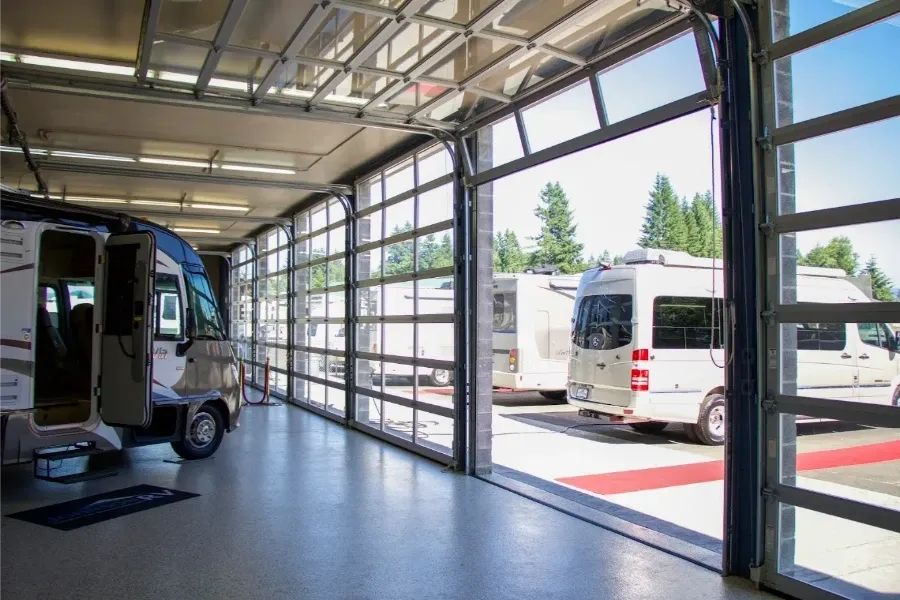
Why Can’t a Broken Commercial Door Wait?
A residential door that sticks is an inconvenience. A commercial door that sticks can stop a business. The opening is the way in and out for deliveries, vehicles, customers and staff, and it is often the only thing securing the building at night.
These are the problems we hear about first:
- Deliveries and loading blocked until the door moves
- Service bays and fleet vehicles stuck inside or outside
- A building left open and unsecured
- Staff and customers working around a hazard
- Air-conditioned or climate-controlled space exposed to the weather
The longer a door runs in poor condition, the more it tends to damage. A door left running on a worn spring strains cables, tracks and the operator, and a repair that could have been one part turns into several.
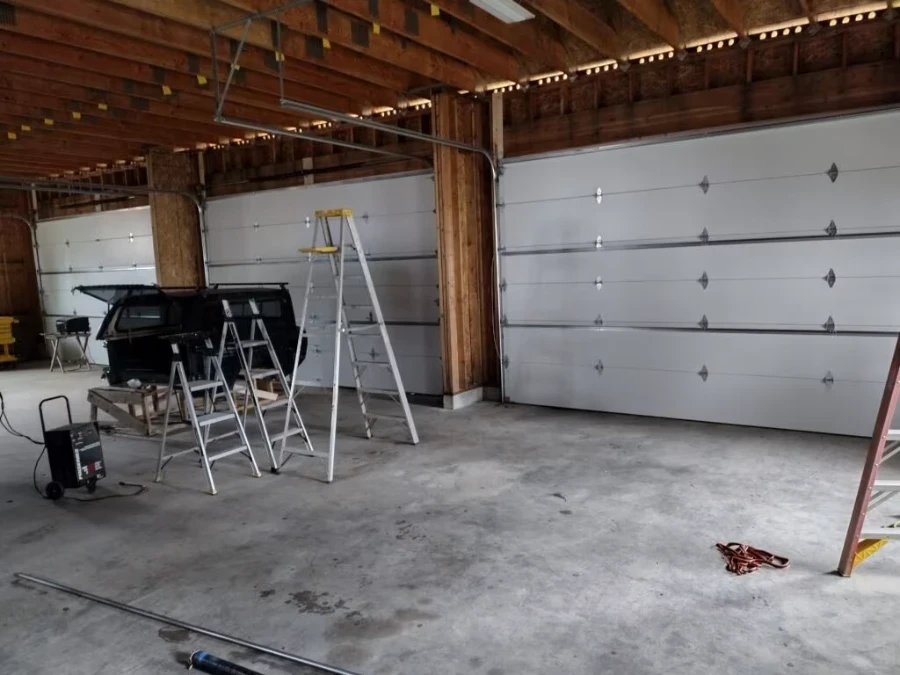
Which Commercial Doors Do We Repair?
| Door type | Common use | Typical problems |
|---|---|---|
| Sectional overhead | Warehouses, shops and service bays | Springs, cables, panels, tracks, rollers and operators |
| Glass and full-view aluminum | Showrooms, service bays and storefront-style openings | Cracked or loose glass sections, hinges, seals and tracks |
| Rolling steel | Storage, loading and security openings | Jammed curtains, bent guides and bottom bars, springs and operators. See our rolling steel page |
| High-speed roll-up | High-traffic interior and exterior openings | Impact damage, sensors, guides and drive faults. Also on our rolling door page |
Not sure what you have? Call and describe it. The size, how it opens and where it sits in the building are usually enough to tell.
Why Do Commercial Doors Wear Out Faster?
The biggest reason is how often they cycle. A busy commercial door can open and close many times a day, so it uses up a spring’s cycle rating in months rather than years. A standard spring rated for 10,000 cycles gives out quickly at that pace.
| Cycles per day | Cycles per year | A 10,000-cycle spring lasts about |
|---|---|---|
| 10 | 3,650 | Just under 3 years |
| 20 | 7,300 | About 16 months |
| 50 | 18,250 | About 6 months |
That is why busy commercial doors are usually fitted with springs rated for far more cycles, and why they deserve more frequent inspection than a home door. Larger, heavier doors and bigger openings add stress, and vehicle impacts are a daily risk in any bay.
What Do We Repair on a Commercial Door?
| Component | What goes wrong | What we do |
|---|---|---|
| Torsion springs | Cycle fatigue, rust and breakage | Replace with matched springs sized to the door and its daily use |
| Cables and drums | Fraying and slipped cables | Replace in pairs and check the drums. See our cable repair page |
| Tracks and rollers | Bent tracks, worn or broken rollers, loose brackets | Realign or replace and check the hardware around them |
| Panels and sections | Vehicle strikes, dents and cracked or loose glass | Repair or replace the damaged section where a match exists |
| Operators | Worn gears, failed boards, limit drift and motor faults | Diagnose, repair or advise on replacement |
| Safety devices | Photo eyes, sensing edges and reversal | Align, repair and test before we leave |
| Seals and hinges | Cracked seals and worn hinges | Replace to close gaps and quiet the door |
We repair and service common commercial operators and will tell you plainly when replacement makes more sense than another repair.
Commercial Operators: What Is Different?
Commercial operators are built for heavier doors and more cycles, and they come in a few arrangements. Trolley operators ride a rail above the door like a residential opener. Jackshaft operators mount to the wall beside the door and turn the spring shaft, which frees up ceiling space and suits doors with high lift. Hoist operators use a chain and are common on larger sectional and rolling doors.
Whichever type you have, the operator should never be the thing holding the door up. If the springs have failed, running the operator against the weight can strip gears quickly. For the basics of how openers work and fail, see our opener repair page.
What Happens During a Commercial Door Repair?
- You call. Tell us the type of door, roughly what size it is, where it is, and what it is doing.
- We secure the opening. The door is made safe, and we can talk through ways to keep the building closed up while it is down.
- We inspect the whole system. Springs, cables, tracks, rollers, panels, operator and safety devices, not just the part that failed.
- We explain. In plain language, with the failed part shown to you, and we note anything else that will need attention soon.
- You approve. Work starts when you say yes.
- We test. Balance, travel, sensors and sensing edges are checked before we leave.
Keeping a Busy Door Running
- Inspect busy doors more often than once a year, in line with how many cycles they run
- Lubricate the right parts and keep tracks clean, as covered on our maintenance page
- Test photo eyes and sensing edges regularly, and never bypass them
- Repair impact damage promptly, since bent sections strain everything attached
- Replace springs on a planned schedule, not after they break
Storm Season and Commercial Doors
Miami Gardens sits in Miami-Dade County’s High Velocity Hurricane Zone, and commercial openings fall under the same product-approval system as homes. A replacement commercial door needs a current Miami-Dade Notice of Acceptance for the exact model and size, installed as the approved assembly. Our impact door page explains how to read an approval and what the permit steps look like.
Before June 1, have the door inspected, confirm it closes and secures fully, and make sure staff know the manual release. After a storm, check tracks, guides and panels before running the door, and reconnect powered operators only when it moves smoothly by hand.
Frequently Asked Questions
Do you repair commercial doors as well as residential ones?
Yes. We repair commercial sectional, glass, rolling steel and high-speed roll-up doors, as well as the springs, cables, tracks and operators that go with them.
What should I have ready when I call?
The type of door, roughly its size, where it is, whether it is stuck open or closed, and what you saw or heard when it failed. If you know the operator brand, mention it.
Do busy doors need special springs?
Often, yes. A door that cycles dozens of times a day uses up a standard spring quickly. Springs rated for more cycles are usually the better match, and we size them to the door and its use.
Can you work around our business hours?
Call and tell us your situation. We will tell you how soon we can arrive and talk through scheduling. If the door is stuck open, say so first, since securing the opening comes first.
Do you repair rolling steel and roll-up doors?
Yes. See our rolling steel door repair page for the parts and problems we handle on those doors.
How often should a commercial door be inspected?
More often than a home door. The right interval depends on how many cycles the door runs and what it carries, and a busy bay door may need checking every few months.
Does replacing a commercial door need a permit?
Replacing a whole commercial door generally involves a permit and inspection, and the door must carry a current Miami-Dade approval. Confirm the requirements for your property with the City of Miami Gardens Building Services Division.
Can you repair a damaged glass section?
Often, depending on the door line and whether a matching section is available. We inspect the section, the frame and the tracks first.
Door down at your business?
We repair commercial overhead, glass and roll-up doors, and we explain what we find before any work starts.
Elite Miami Gardens Garage Door Repair, 6187 NW 167th St, Suite 101, Miami Gardens, FL 33015